
Canada Study Permit 2026 Proof of Funds Update for Indian Students

Canada is changing the way international students must show financial support for study permit applications. From 1 September 2026, students applying to study in Canada outside Quebec will need to meet updated proof of funds requirements.
For a single applicant, the minimum amount required for living expenses will be CAD 23,448, apart from tuition fees and transportation costs. This update matters for Indian students planning intakes in 2026 and beyond, especially those preparing education loans, bank statements, GICs, sponsor documents, or family financial records.
This guide from Think Big Global explains the Canada Study Permit Proof of Funds 2026 update in simple terms, what documents may help, common mistakes to avoid, and how to prepare before applying.

🇨🇦 What is changing from September 1, 2026?
From 1 September 2026, international students applying for a Canadian study permit to study outside Quebec must show updated financial capacity.
The key change is the increase in the minimum living expense requirement for a single study permit applicant. Students must prove they have enough funds to support themselves while studying in Canada.
This is separate from:
First-year tuition fees
Travel or return transportation costs
Additional funds for accompanying family members, if any
The change applies to applications submitted on or after 1 September 2026. If a student is planning for a 2026 or 2027 intake, financial planning should begin early.
💰 New Canada study permit proof of funds requirement
The updated Canada Proof of Funds requirement is meant to show that a student can afford basic living costs in Canada without financial hardship.
For study permit applications outside Quebec, applicants must show:
Living expenses
The minimum living cost amount required by Immigration, Refugees and Citizenship Canada, known as IRCC.
Tuition fees
Usually at least the first year of tuition, based on the letter of acceptance from the Canadian institution.
Transportation costs
Funds for travel to Canada and, in many cases, return travel.
Family support funds
Extra funds if a spouse, partner, or dependent children are travelling with the student.
The Canada Study Permit 2026 update makes it even more important to show clean, genuine, and well-documented funds.
🎓 CAD 23,448 requirement for a single applicant
For a single applicant studying outside Quebec, the updated minimum living expense amount is:
CAD 23,448 for one student, excluding tuition fees and transportation costs.
This means the CAD 23,448 Proof of Funds is not the total amount a student may need. It is only the minimum amount for living expenses.
What this means in practice
If a student receives admission to a Canadian college or university, the financial plan should include:
CAD 23,448 for living expenses
First-year tuition fee shown on the offer letter or fee statement
Travel costs from India to Canada
Any additional amount required for family members, if they are accompanying the student
The actual amount may be higher depending on the province, city, institution, course fee, lifestyle, and family situation.
For example, a student going to Toronto or Vancouver may need to plan for higher real-life living costs than a student going to a smaller city. IRCC gives minimum financial requirements, but students should also prepare for practical expenses such as rent deposits, winter clothing, health insurance, books, groceries, and local transport.

✈️ Why tuition fees and travel costs must also be considered
Many applicants make the mistake of focusing only on the minimum living expense figure. For a Canadian study permit, funds must usually cover a wider picture.
Tuition fees are a major part of the budget
Canadian institutions mention tuition fees in the letter of acceptance or fee documents. Visa officers may check whether the student has enough money to pay for studies, not only daily living.
Students should keep proof of tuition payment, if already paid. If tuition is not fully paid, they should show clear funds available to pay it.
Travel costs should not be ignored
Transportation costs include the student’s travel from India to Canada. A visa officer may also look for evidence that the student can return from Canada after the authorised stay, where required.
For Indian students, this can include estimated flight costs from cities such as Visakhapatnam, Hyderabad, Bengaluru, Chennai, Delhi, or Mumbai to the Canadian destination.
Planning early helps avoid last-minute pressure, especially when currency exchange rates change.
👨👩👧 Proof of funds for students travelling with family members
The financial requirement changes when family members accompany the student.
Family members may include:
Spouse or common-law partner
Dependent children
Other eligible dependants, depending on the case
A single student must meet the CAD 23,448 living expense requirement. If family members travel with the student, extra funds will be required based on the number of accompanying people.
The exact amount can change, so students should always check the latest IRCC financial requirement table before applying.
Why family applications need stronger planning
Family applications often need more detailed financial documents because the total cost of living increases. Rent, food, health coverage, childcare, school-related expenses, and travel can all increase the budget.
A student travelling with family should prepare:
Clear proof of relationship
Funds for each family member
A realistic settlement plan
Strong explanation of income and savings
Documents showing the sponsor’s financial stability, if applicable
📄 Accepted financial documents and how students can demonstrate financial support
IRCC may accept different types of documents to prove financial support. The right documents depend on the student’s situation, source of funds, country of application, and programme type.
Common proof of funds documents may include:
Bank statements
Education loan sanction letters
Proof of tuition payment
Guaranteed Investment Certificate, often called a GIC
Scholarship or funding letters
Fixed deposit documents
Sponsor income proof
Income tax returns
Salary slips
Business ownership or income documents
Property income documents, where relevant
Bank balance certificates with statement history
How to make financial documents stronger
Students should focus on clarity and consistency. A visa officer should be able to understand where the money came from, who owns it, and whether it is available for studies.
Useful steps include:
Maintain funds in the account for a reasonable period before applying
Explain large deposits with valid proof
Match sponsor documents with the relationship proof
Keep bank statements clear and complete
Use official documents from recognised banks or financial institutions
Make sure names, dates, account numbers, and amounts are consistent
For the Canada Study Visa for Indian Students, documentation quality can make a major difference. The goal is not only to show money, but also to show genuine financial readiness.
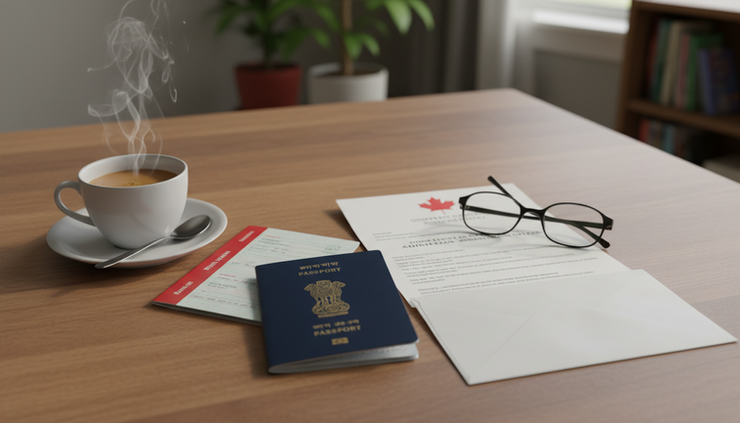
🏦 Common financial documentation mistakes to avoid
Even genuine students can face problems if their financial documents are weak, unclear, or inconsistent.
Showing sudden unexplained deposits
Large deposits just before applying can raise questions. If funds were recently transferred, explain the source with supporting documents such as sale deeds, loan papers, fixed deposit closures, or sponsor transfer records.
Ignoring tuition fee proof
If tuition has been paid, include the official receipt. If not paid, show that funds are available. Do not assume the living expense amount alone is enough.
Mixing too many accounts without explanation
Using multiple bank accounts is acceptable in many cases, but the documents should be easy to follow. Add a simple fund summary if needed.
Using weak sponsor documentation
If parents or relatives sponsor the student, include proof of relationship, income, bank statements, tax records, and an explanation of support.
Submitting outdated documents
Bank statements, balance certificates, loan letters, and sponsor documents should be recent and valid at the time of application.
Not matching forms and documents
Amounts declared in forms should match the documents submitted. Any mismatch can create doubt.
📚 What Indian students should prepare before applying
Students planning to Study in Canada should begin financial planning months before filing the study permit application.
Here is a practical preparation checklist.
Before applying to universities or colleges
Estimate total tuition fee for the course
Check living costs in the province and city
Understand whether the institution is eligible for international students
Compare scholarships and payment deadlines
Discuss finances with parents or sponsors early
After receiving admission
Review the letter of acceptance carefully
Pay tuition if required by the institution
Arrange education loan documents, if using a loan
Prepare GIC or bank documents, if applicable
Collect sponsor financial documents
Keep proof of source of funds
Before submitting the study permit application
Check the latest Canada Student Visa Requirements
Confirm the updated Canada Study Permit Financial Requirements
Prepare a clear statement of purpose
Attach complete proof of funds
Review all names, dates, fees, and account details
Keep scanned copies clear and readable
Students from Visakhapatnam and nearby regions often start with counselling, course selection, and document planning together. That is a smart approach because study permit readiness begins before admission, not after admission.
🍁 Important differences for students planning to study in Quebec
Quebec has its own rules and processes for international students. The proof of funds requirements for Quebec are different from the requirements for other Canadian provinces and territories.
Students planning to study in Quebec may need to follow Quebec-specific financial rules and may also need additional provincial documentation, depending on the programme and institution.
Before applying for a study permit for Quebec, students should check:
Quebec’s financial capacity requirements
The latest provincial student process
Institution-specific fee and admission conditions
IRCC requirements for Quebec-bound students
Any additional forms or approvals required at the time of application
Do not use the outside-Quebec requirement blindly for Quebec applications. The CAD 23,448 figure applies to a single applicant under the updated requirement for study permit applications outside Quebec.

🤝 How Think Big Global can help students with university applications, documentation and study permit guidance
A successful Canada study plan needs more than admission. Students must choose the right course, prepare strong documents, understand financial requirements, and submit a complete study permit file.
Think Big Global supports students with:
University and college shortlisting
Course selection based on academic profile and career goals
Application guidance
Offer letter review
Financial document planning
Study permit document checklist
Statement of purpose guidance
Pre-application review
Guidance for students applying with family members
Support for students comparing Quebec and non-Quebec options
For Indian students planning 2026 and later intakes, early preparation is the safest path. The updated Canada Study Permit Financial Requirements mean students should not wait until the last month to arrange funds.
Speak with Think Big Global to plan your Canada study journey with the right course, the right documents, and a clear financial strategy.
FAQs on Canada Proof of Funds for 2026
What is the new proof of funds amount for a single Canada study permit applicant?
From 1 September 2026, a single applicant studying outside Quebec must show CAD 23,448 for living expenses, apart from tuition fees and transportation costs.
Does CAD 23,448 include tuition fees?
No. The CAD 23,448 amount is for living expenses only. Students must also show funds for tuition and travel.
Does the same amount apply if I travel with my spouse or child?
No. If family members accompany the student, additional funds are required. The amount depends on the number of accompanying family members.
Is Quebec covered under the same proof of funds rule?
No. Quebec follows different financial requirements and processes. Students planning to study in Quebec should check the latest Quebec-specific rules before applying.
Can an education loan be used as proof of funds?
In many cases, an education loan sanction letter from a recognised financial institution can support a study permit application. The loan document should be clear, valid, and supported by other required documents where needed.
Final takeaway for Indian students planning Canada studies
The new proof of funds update is a major planning point for students aiming for Canada in 2026 and beyond. From 1 September 2026, a single applicant studying outside Quebec must show CAD 23,448 for living expenses, plus tuition and transportation costs.
Start early. Keep funds clean and traceable. Match your documents with your study plan. If family members are travelling with you, prepare a stronger financial file.
Disclaimer: This blog is for general information only and is not legal or immigration advice. Canadian immigration rules can change. Students should always check the latest official IRCC and Quebec government requirements before applying, or speak with a qualified study abroad adviser for case-specific guidance.


Comments